
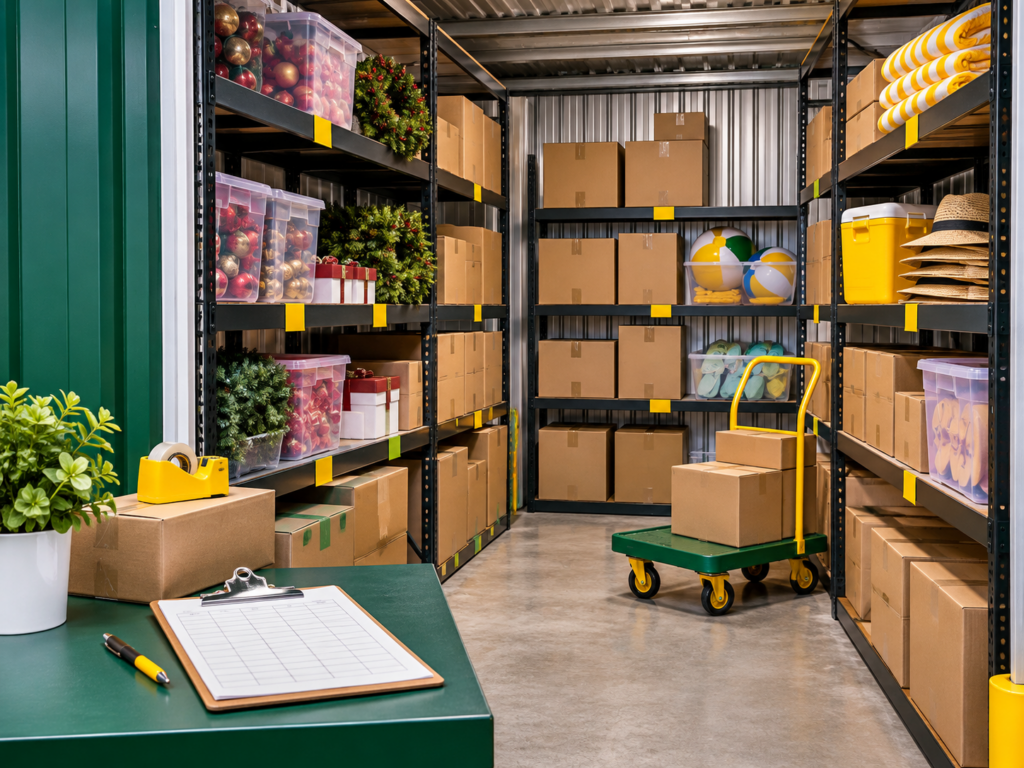
Seasonal demand can bring exciting sales opportunities for Sydney small businesses. Hills Self Storage offers flexible business storage that can help retailers and online sellers make room for stock they only need at certain times of year. A clear seasonal calendar, sensible access arrangements and reliable inventory records make that extra space much more useful.
Seasonal inventory is not limited to Christmas. A business may hold summer accessories, winter products, school-related stock, event supplies or promotional packaging. List each product group, the period when customers usually want it, and the date it must be available for sale.
Work backwards from those dates. Allow time for suppliers, stock checks, transfers and any preparation needed before products return to your shop or dispatch area. This approach helps you distinguish items that can remain in reserve from stock that needs to be close at hand next week.
A shop or home-based business works better when current products are not buried behind cartons for another season. Consider placing longer-term reserve inventory in business storage while retaining sufficient everyday stock at your normal operating premises.
Before moving items, group them by the next planned release date rather than simply by the date they arrived. For example, a winter collection that will be needed in March should be easier to retrieve than leftover decorations that may not be used for many months.
Hills Self Storage has business storage options in the Hills District, including Castle Hill, Rouse Hill and Galston. Ask the team which location and unit size best suit your expected volume and retrieval frequency.
Storage access matters most when the season changes quickly. Decide who will collect products, how often they need to visit, and whether transfers happen before opening hours, after closing or on weekends. Confirm facility access hours and any relevant arrangements before committing to a unit.
Prepare a simple retrieval schedule that identifies the products, approximate quantities and person responsible for each collection. If several staff members are involved, agree on how stock movements will be recorded so the next person knows what has changed.
Your inventory record should show what is in storage and when it is expected to return. It need not be complicated, but it should be kept current whenever stock moves.
• Product identifier: Record the SKU or a consistent product description.
• Quantity and location: Note the number of units and the carton or shelf reference.
• Season and release date: Record when the stock is next expected to be needed.
• Condition and review date: Flag damaged packaging, discontinued products or stock requiring inspection.
• Movement history: Record the date, quantity and person responsible for each transfer.
This article focuses on seasonal scheduling. For more detailed shelf layouts and picking workflows, use the existing guide to organising business stock in a storage unit rather than duplicating that advice.
A seasonal storage plan should change as inventory changes. Before the next peak, estimate incoming cartons and compare that volume with the stock already held. Leave practical room for access and handling rather than choosing space based only on the number of boxes.
After the season, review unsold stock, returns and reusable packaging. Some items may be transferred back, some may remain in reserve, and others may need a commercial decision before being stored again. Flexible unit options can be discussed with Hills Self Storage as needs change.
The guide to Christmas stock storage explains peak-season preparations in more detail. For year-round planning, focus on the timing of each seasonal change and the cost of repeated transfers.
If suppliers deliver cartons or pallets, confirm how those deliveries can be handled at your chosen facility. Hills Self Storage describes business support services at selected locations, but availability and arrangements should be checked directly with the team. Do not assume couriers can leave goods or that equipment will always be available without prior agreement.
A seasonal stock calendar and clear retrieval responsibilities can help your business use storage more efficiently throughout the year. Hills Self Storage supports Sydney businesses with flexible options across the Hills District. Request a storage quote to discuss the location, size and access arrangements that suit your next trading season.
It is space used to hold inventory needed during particular trading periods, rather than keeping all of that stock at your everyday business premises.
Plan ahead of supplier deliveries and the next sales peak, allowing enough time to check quantities and arrange transfers.
Review records whenever stock moves and schedule periodic checks based on the products, packaging and how frequently you need access.
Potentially, depending on the goods and their storage requirements. Discuss suitability, unit options and any restrictions with the facility.
Hills Self Storage offers a range of sizes. Ask about current availability and the practical process for changing units.
